
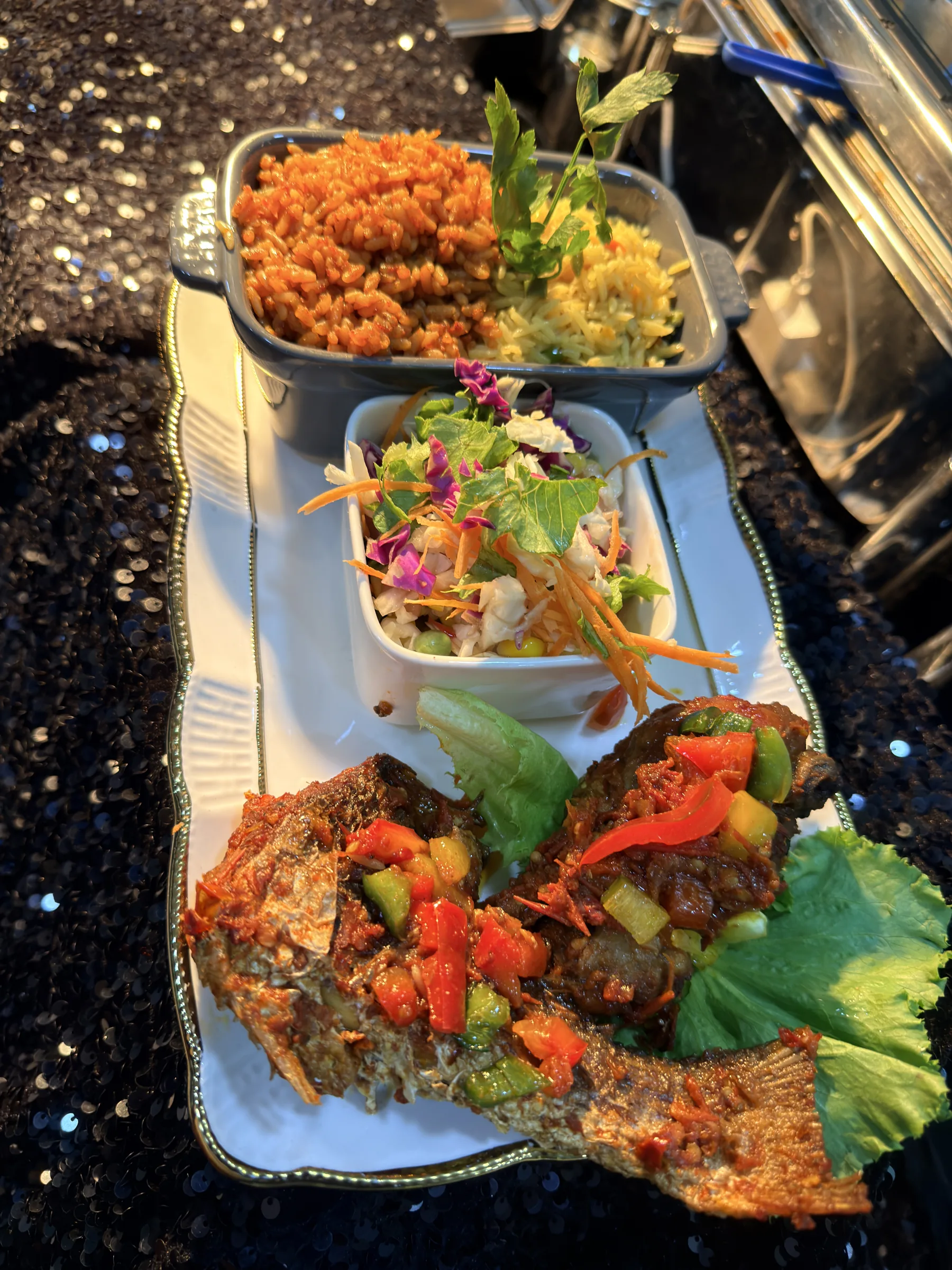
There is jollof, and then there is party jollof rice. Anyone who has queued at a Nigerian wedding knows the difference: that smoky aroma, the deep orange-red colour and every grain standing separate. Jollof is having a global moment too, with cook-offs at diaspora festivals from Miami to Brooklyn this September. So what is the secret? It is less about magic and more about method.
What makes party jollof rice different?
Party jollof rice gets its famous flavour from three things: a well-fried pepper base, rice that steams rather than boils, and a little controlled burning at the bottom of a large pot. Cooking in big batches over firewood or high heat creates that smoky “bottom pot” taste that home cooks often chase.
In other words, the scale is part of the recipe. Caterers are not hiding a secret ingredient. They are cooking in conditions that naturally build flavour, and they repeat the same steps every time.
Start with the base
A great jollof lives or dies by its base. Blend red bell peppers (tatashe), plum tomatoes, scotch bonnets and onions, then reduce the blend until most of the water has gone. This step is where many cooks rush, and it shows in the final dish.
Next, fry tomato paste in oil until it darkens and loses its sharp, tinny taste. Add your reduced pepper blend and fry again until the oil rises to the top. Season with curry powder, dried thyme, bay leaves, stock and salt. Taste it. The base should be bold, because the rice will soak up and soften every flavour.
Choosing and washing the rice
Long-grain parboiled rice is the caterer’s choice because it holds its shape and does not turn mushy. Wash it well to remove excess starch. Some cooks parboil it briefly, others add it straight to the sauce. Either works, as long as you are consistent.
The golden rule is liquid control. Add just enough stock to come level with the rice, cover tightly with foil and a lid, and let steam do the work. Too much liquid gives you soggy rice. Too little and it stays hard in the middle. Stir gently and only when needed, so the grains stay whole.
Creating the smoky flavour safely
That signature smoky note comes from letting the bottom layer catch slightly once the rice is almost done. Turn up the heat for the final few minutes and listen for a gentle crackle. Do not stir. When you serve, mix a little of that toasted layer through the pot.
Not cooking over firewood? A few tricks help:
- Add sliced onions and tomatoes on top for the final steam.
- Stir through a knob of butter at the end for richness.
- A touch of smoked paprika adds depth without overpowering.
The aim is smoky, never burnt. Bitter, blackened rice is a mistake, not a feature.
Cooking jollof for 200 guests
Scaling up is where technique meets planning. A recipe that works in one pot will not simply multiply. Large pots heat unevenly, and liquid evaporates at different rates. Professionals cook in several medium batches rather than one giant pot, which gives better control and less risk.
Food safety matters just as much as flavour. Cooked rice can carry Bacillus cereus spores that survive cooking and multiply if rice is left warm for too long. The UK Food Standards Agency recommends keeping hot food hot and cooling leftovers quickly. For events, that means:
- Holding cooked jollof above 63°C until it is served.
- Cooling any leftovers fast and refrigerating them within an hour or two.
- Reheating only once, until piping hot all the way through.
About the jollof wars
No article on jollof is complete without mentioning the friendly rivalry between Nigeria, Ghana and Senegal, where the dish is believed to have originated as thieboudienne. Ghanaians love their fragrant jasmine rice. Nigerians swear by parboiled long grain. Everyone thinks theirs is best.
Honestly, the debate is the point. It keeps the dish alive, gets people talking and brings crowds to cook-offs around the world.
Final thoughts
Perfect party jollof rice comes down to patience with the base, discipline with the liquid and confidence with the heat. Add proper food safety, and you have a dish that can feed a wedding or a boardroom without missing a beat.
Which side of the jollof wars are you on? Tell us, or get in touch to put proper party jollof on your next event menu.
From Brooklyn to Brussels: How African Restaurant Weeks Are Changing the Conversation